filter_list Showing 535 results for "Discovery" close Clear
search
dashboard All 535 article news 178museum exhibitions 173trending_up market 90article local 31article culture 30gavel restitution 15person people 9article policy 3article event 2candle obituary 2rate_review review 2
date_range Range Today This Week This Month All
Subscribe

Investor Says Artnet Layoffs Were Necessary for ‘Financial Strength’

Investor and owner Andrew E. Wolff has publicly explained the recent layoffs at Artnet and Artsy as a necessary step for the companies' financial restructuring and future growth. He framed the cuts as part of a broader consolidation strategy, merging the US businesses and organizational structures of the two digital art platforms while keeping their brands separate.

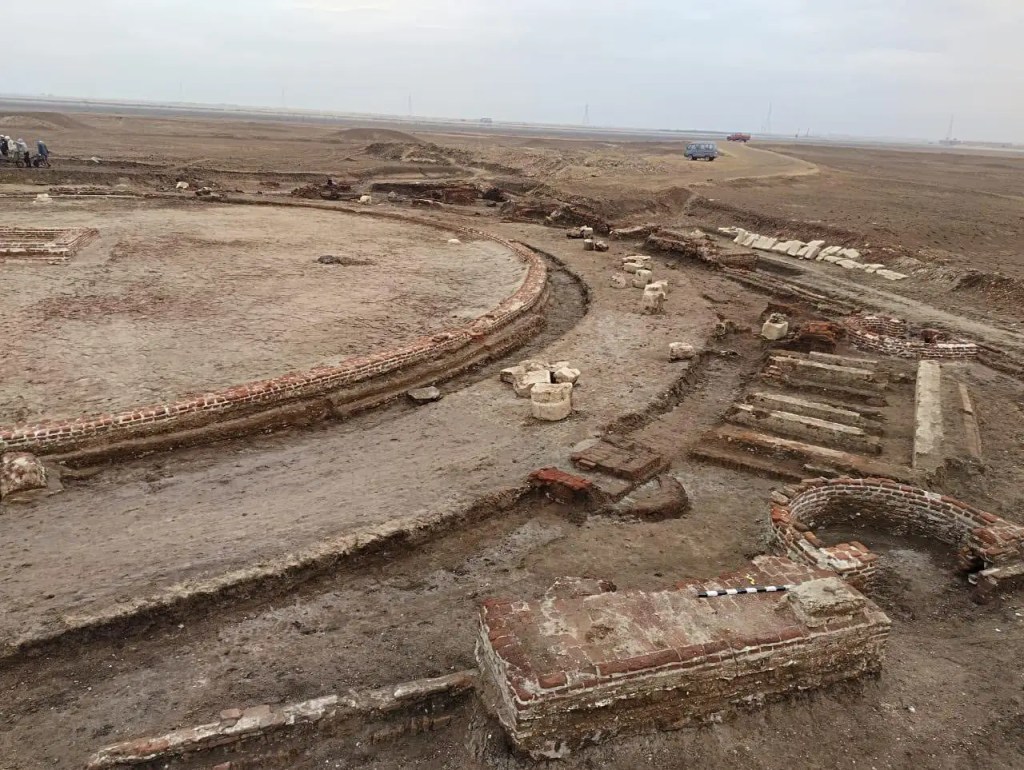
Ruins of a ‘Unique‘ Temple Complex Discovered in Northern Sinai

An Egyptian archaeological mission has unearthed a unique temple complex at Tell el-Farama, the site of the ancient city of Pelusium in northern Sinai. The discovery features a massive circular water basin, approximately 100 feet in diameter, surrounded by drainage channels and a central plinth likely intended for a statue. Initially mistaken for a civic building when first excavated in 2019, further study has revealed the site to be a sacred water installation used for religious rituals between the 2nd century BC and the 6th century AD.

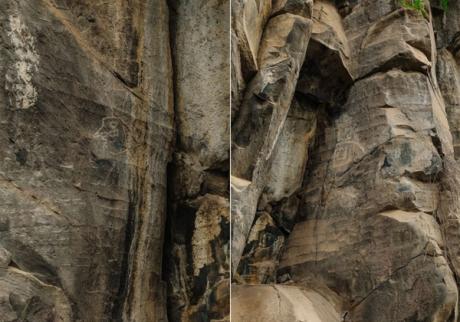
Petroglyphs and cave paintings, some more than 4,000 years old, discovered in Mexico

Archaeologists from Mexico’s Instituto Nacional de Antropología e Historia (INAH) have identified 16 petroglyphs and cave paintings near the Tula River in Hidalgo. The artworks span over 4,000 years, ranging from prehistoric times through the Mesoamerican Postclassic period and into the early colonial era. The discovery, which includes depictions of the rain god Tláloc and various anthropomorphic figures, was made during archaeological salvage work for a new passenger rail line connecting Mexico City and Querétaro.

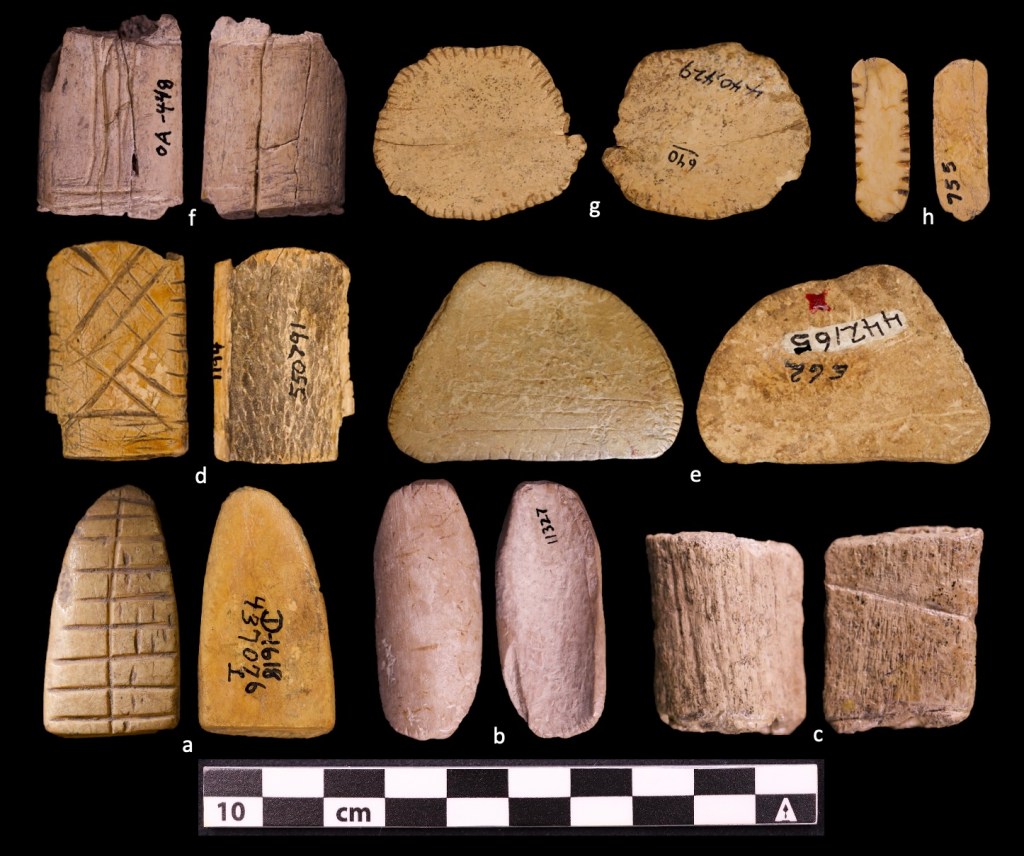
Native Americans Played Dice Games Far Earlier Than Previously Known, Study Shows

A groundbreaking study from Colorado State University reveals that Native Americans in the western Great Plains were using dice for gaming over 12,000 years ago. Researcher Robert J. Madden identified two-sided dice made of bone or wood from archaeological sites in Wyoming, Colorado, and New Mexico, pushing the known history of games of chance back significantly further than previously recorded.

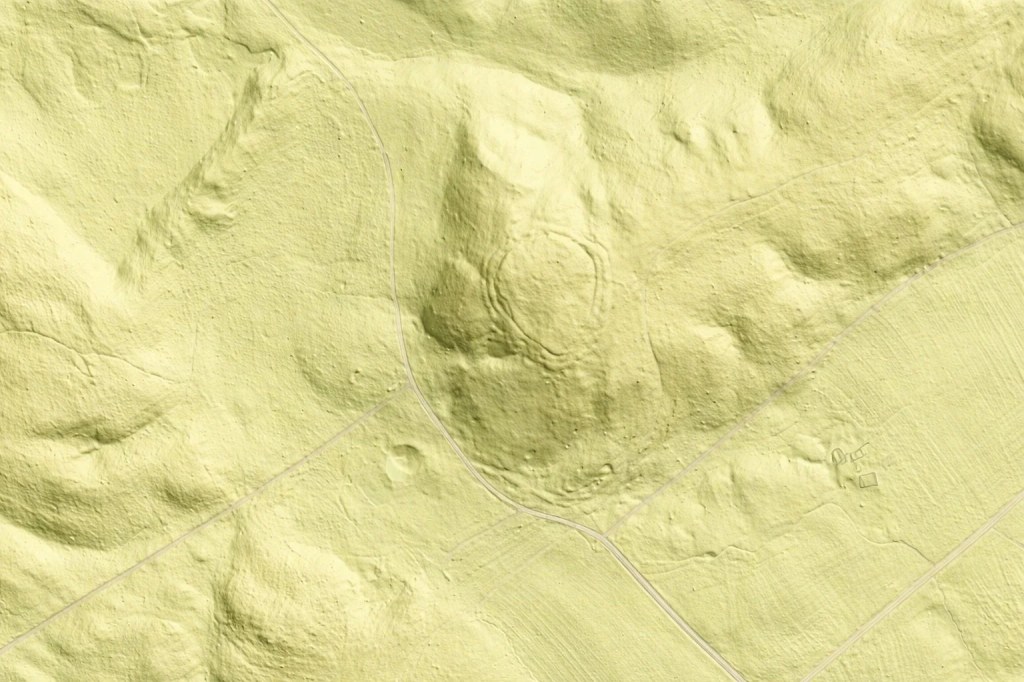
Archaeologists Uncover a 2,000-Year-Old Hillfort in Estonia

Archaeologists from the University of Tartu have discovered a 2,000-year-old Iron Age hillfort at Köstrimägi in Tartu County, Estonia. Using high-resolution terrain mapping, the team identified a 16,000-square-foot fortification featuring an unusual stepped rampart system that dates back to between 41 BCE and 9 CE. Despite its size, the site yielded few artifacts beyond pottery fragments and charcoal, suggesting a very brief period of occupation before it was destroyed by fire.

Bronze Age State Metal-Working Center Unearthed Near China’s Yangtse River

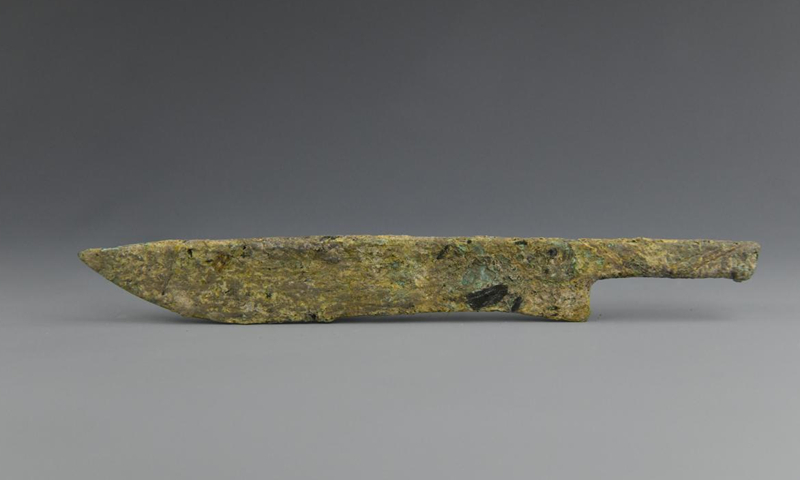
Archaeologists at the Shenduntou site near the Yangtze River have unearthed a significant Bronze Age metal-working center dating back to the Zhou dynasty. The excavation, led by Nanjing Normal University, revealed approximately 1,000 artifacts including clay molds, arrowheads, and knives, alongside evidence of furnaces and protective earthen walls. These findings confirm the existence of a high-level workshop dedicated to large-scale bronze production within the ancient Wu kingdom.

Native Americans created dice more than 12,000 years ago, study finds

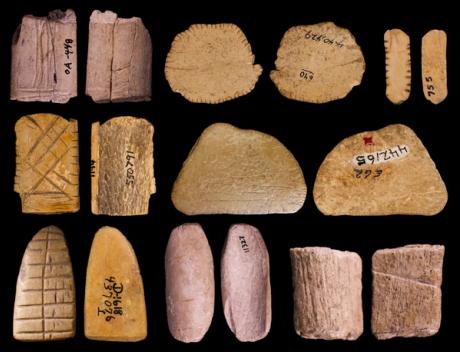
Archaeological research from Colorado State University has identified the world's oldest known dice, created by Native American hunter-gatherers on the western Great Plains over 12,000 years ago. These two-sided "binary lots," found at Folsom-period sites in Wyoming, Colorado, and New Mexico, predate the earliest known Old World dice by more than 6,000 years. The study reclassifies artifacts previously overlooked or misidentified, highlighting that these objects were the only decorated, non-utilitarian items found at these late-Pleistocene sites.

Dutch Museum Discovers 8-Inch Ancient Roman Phallus

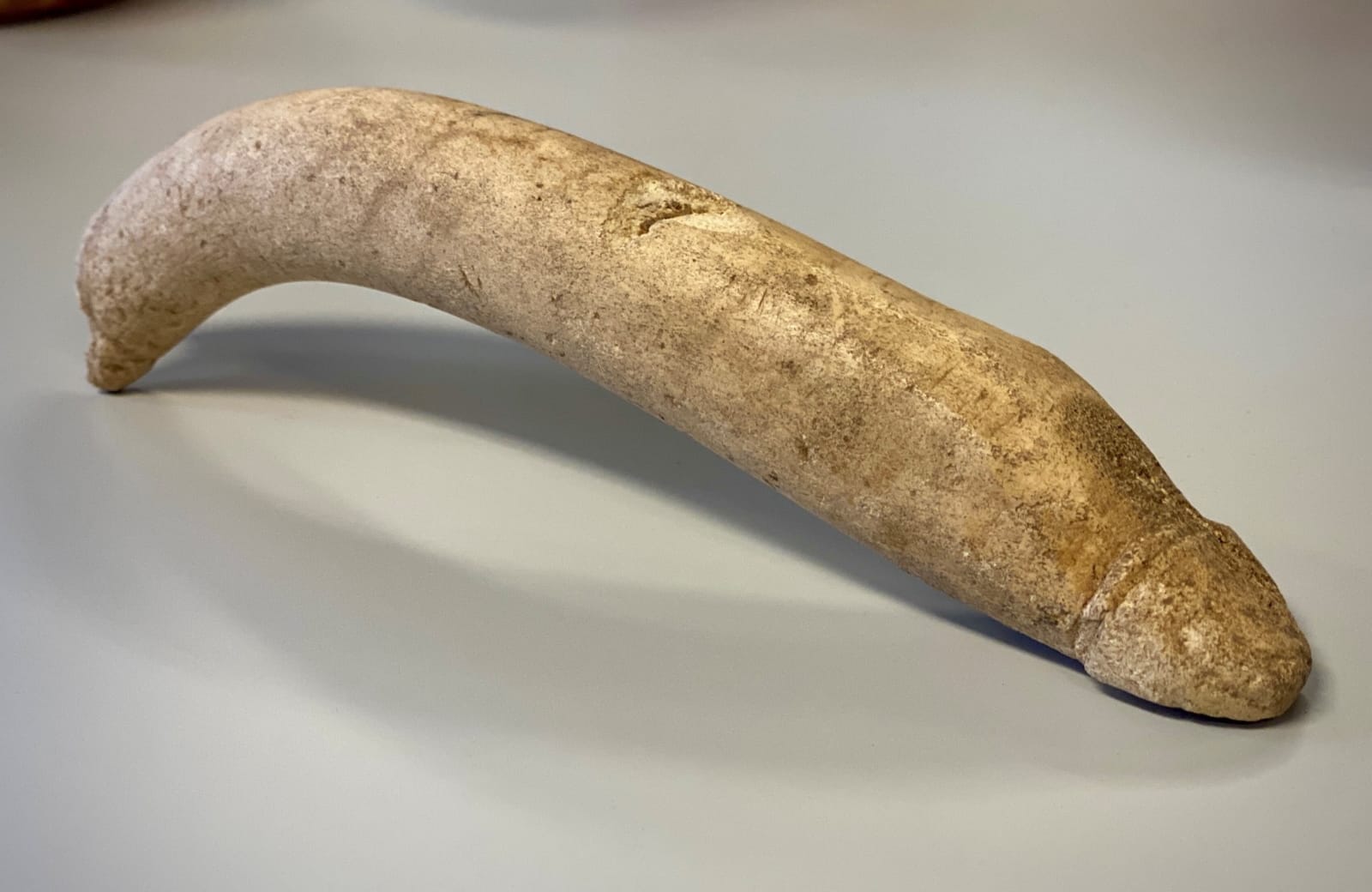
Archaeologists at the Valkhof Museum in Nijmegen discovered a rare, eight-inch Ancient Roman phallus carved from bone while cataloging a massive backlog of 16,000 archaeological boxes. The artifact was found alongside high-quality Roman tableware during an €8 million government-funded inventory project aimed at processing collections from defunct storage depots in the province of Gelderland.

Remnants of 3,400-Year-Old Loom in Spain Sheds Light on Bronze Age Textile Production

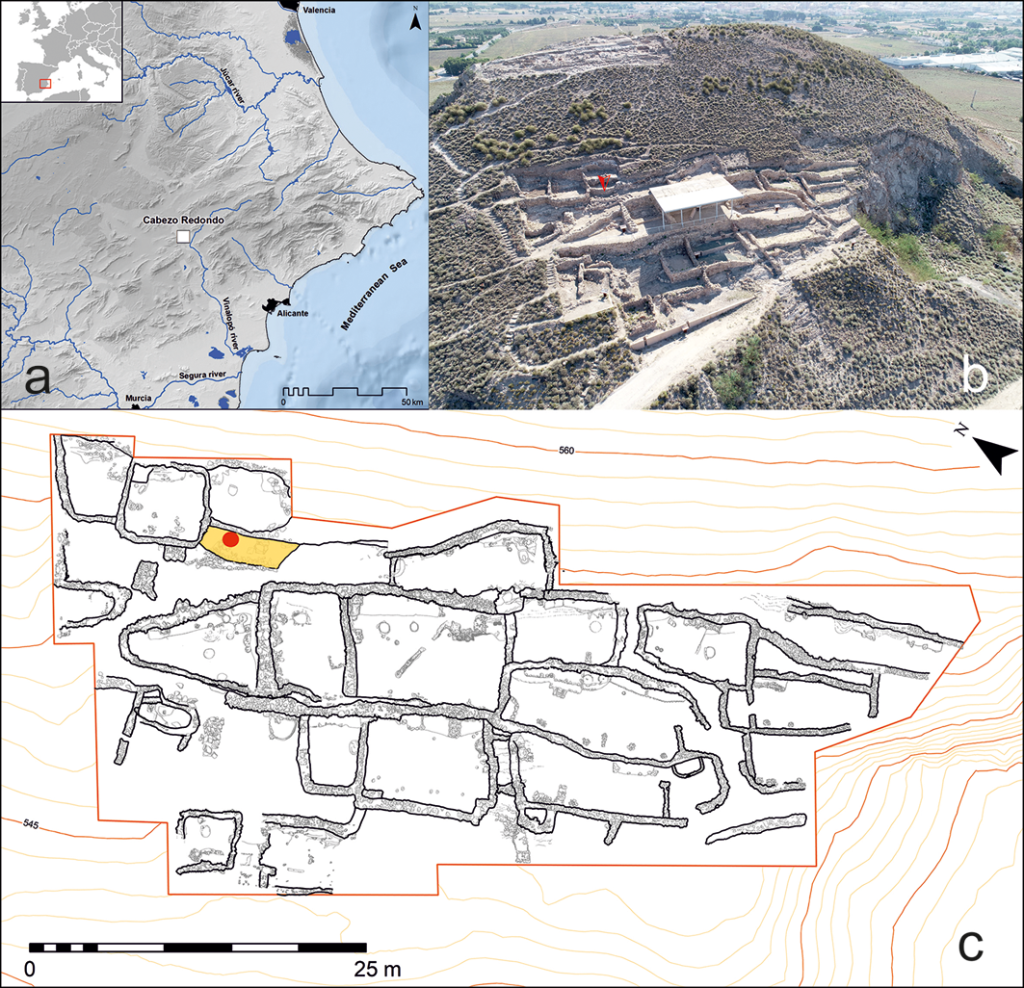
Archaeologists in Spain have published new research on a remarkably preserved 3,450-year-old wooden loom, discovered in 2008 at the Cabezo Redondo site. The loom survived because a fire destroyed the surrounding Bronze Age village and a roof collapsed on it, charring and protecting the wood from decay. This rare find includes over 200 lightweight loom weights, suggesting the community was engaged in intensive production of delicate wool textiles.

trailer the christophers steven soderberghs film

Director Steven Soderbergh is set to release 'The Christophers', a new film centered on the London art world starring Ian McKellen and Michaela Coel. The plot follows a faded 1960s Pop Art star whose estranged children hire a former art forger to secretly complete his unfinished canvases to secure a future inheritance. Following its premiere at the Toronto Film Festival, the movie is scheduled for a theatrical release in April.

unusual medusa carving discovered archaeological site turkey

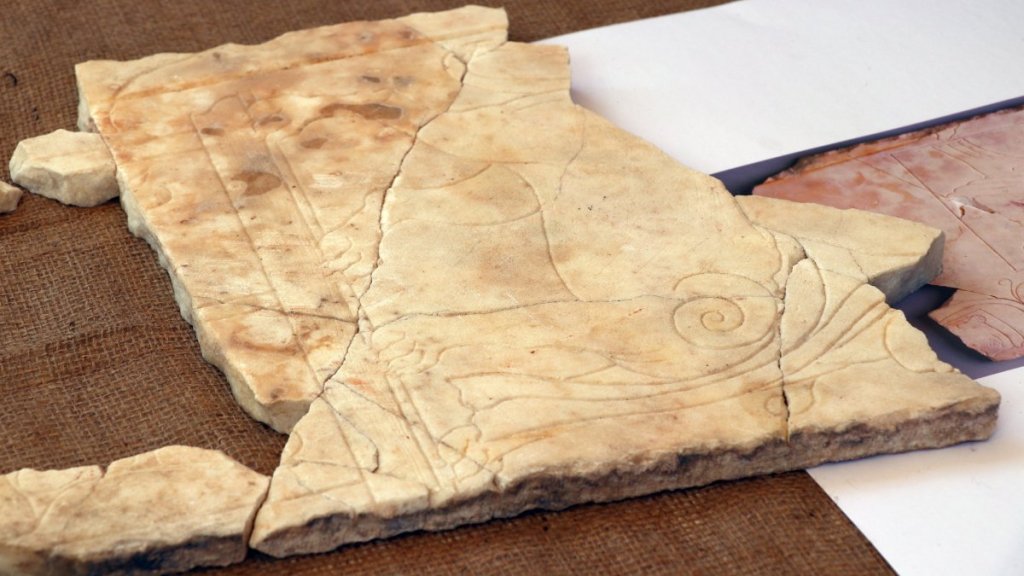
Archaeologists excavating a Roman forum near the ancient city of Amastris (modern-day Amasra) in Turkey have uncovered a marble Medusa carving with an unusual smiling expression. The relief was found atop decorative columns that once formed a covered walkway (stoa) in the forum. Excavations began three years ago after historical remains were discovered during school construction in 2017. The project, overseen by Bartin University’s Archaeology Application and Research Center and supported by the Turkish Ministry of Culture’s “Heritage of the Future” initiative, has so far reconstructed three columns across the 30,000-square-foot site.

ancient egyptian pleasure boat portus magnus

Underwater archaeologist Franck Goddio and his Institut Européen d’Archéologie Sous-Marine (IEASM) team have discovered the remains of a 35-meter-long ancient Egyptian pleasure boat, known as a thalamagos, in the submerged Portus Magnus off Alexandria’s harbor. The 28-meter preserved timbers, found seven meters underwater and buried under sediment, represent the first physical evidence of such vessels, previously known only from ancient texts like Strabo's Geography and the Nile mosaic at Palestrina. The ship, built in Alexandria and propelled by oars, features a central pavilion and Greek graffiti from the 1st century C.E., and may have sunk around 50 C.E. during the destruction of the temple of Isis on Antirhodos Island.

the hunt sanxingdui civilization china

The article recounts the rediscovery and ongoing excavation of the ancient Sanxingdui civilization in Sichuan, China, beginning with a peasant's accidental find of jade relics in 1929. After decades of political disruption, large-scale digs resumed in the 1980s, uncovering over 50,000 artifacts—including distinctive bronze masks with gold foil—that offer the only clues to this Bronze Age city's culture, trade networks, and mysterious collapse around the 11th century B.C.E.

roman medusa cameo hallstatt

A rare ancient Roman cameo relief depicting the gorgon Medusa was discovered by construction workers during excavation work for a new funicular railway in Hallstatt, Austria. The 1.5-cm banded agate piece, dated to the 2nd century C.E., was likely crafted in a northern Adriatic workshop and worn as a necklace by an elite Roman woman. It will become part of the permanent collection at Austria's Linz Castle Museum.

kryptos sculpture code cia

An anonymous buyer paid $962,500 at an RR Auction sale for the code to the final unsolved passage of Jim Sanborn's sculpture "Kryptos," located at the CIA headquarters in Langley, Virginia. The sculpture, dedicated in 1990, contains four encrypted passages; three have been cracked by cryptologists, but the 97-character fourth passage (K4) has remained unsolved for decades. Sanborn, now 80, decided to sell the solution after growing tired of fielding inquiries from enthusiasts, despite a recent discovery of the solution in the Smithsonian's Archives of American Art that raised questions about the auction.

maya train old man sculpture construction mexico

Archaeologists excavating for Mexico's Maya Train project in the Yucatan peninsula have uncovered a 2,000-year-old limestone sculpture of an elderly man, dating to the Preclassic period (2500 B.C.E.–200 C.E.). The 18-inch tall carving, found at the site of Sierra Papacal near Mérida, once marked the entrance of a west-facing ceremonial structure. The sculpture's flat nose, defined lips, and deep eye sockets symbolize wisdom and respect in Maya culture. It will be transferred to a laboratory for conservation and further study.

andrew wolff artnet artsy future

Andrew Wolff, CEO of Beowolff Capital, has acquired Artnet and a controlling stake in Artsy, positioning himself as a key consolidator in the digital art market. In an interview tied to his inclusion in the Observer's “Art Power Index,” Wolff outlined plans to integrate data across platforms, develop AI-native tools, and create a seamless ecosystem for discovery, valuation, and transaction, aiming to empower younger collectors who favor networked, permissionless access over traditional gatekeepers.

egyptian ceramic vessel ancient pompeii canteen

A nearly 2,000-year-old Egyptian ceramic vessel, a bucket-shaped situla, was discovered during conservation work at the Thermopolium of Regio V in Pompeii. The faience pot, decorated with Egyptian-style hunting reliefs, was found in the kitchen of a well-preserved fast-food restaurant that served the working- and middle-class residents of the Roman city before its destruction by Mount Vesuvius in 79 CE. The discovery was published by the Pompeii Archaeological Park’s online journal.

ancient egyptian iconography roman bathhouse sagalassos turkey

Archaeologists have identified ancient Egyptian iconography on a marble lintel in a Roman-era bathhouse at Sagalassos, Turkey. The carving depicts the sphinx god Tutu, flanked by two human figures wearing the crowns of Upper and Lower Egypt, along with deities Horus and Sobek. Dating to the reign of Emperor Augustus (27 BCE–14 CE), the panel was found in the frigidarium and was sourced from marble quarried over 124 miles away in the Afyonkarahisar region.

ancient rome new orleans tombstone

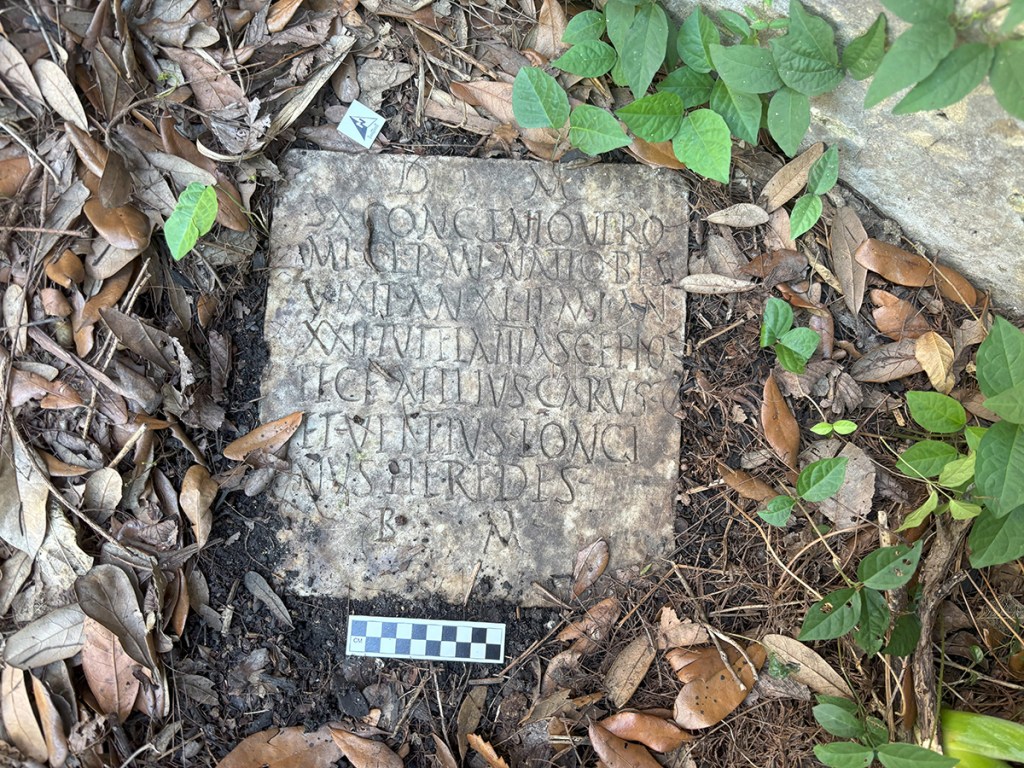
A 2nd-century Roman gravestone inscribed for a sailor named Sextus Congenius Verus was discovered in March 2025 by Daniella Santoro and Aaron Lorenz while doing yard work at their New Orleans home. University of New Orleans archaeologist D. Ryan Gray, working with colleagues at the University of Innsbruck and Tulane University, traced the stone to a missing object from a museum in Civitavecchia, Italy. Researchers believe it was brought to the U.S. as a souvenir by a member of the 34th division of the Fifth Army after the liberation of Rome in 1944. The FBI’s Art Crime Team is now involved in repatriating the headstone to Italy.

john davidge baltimore medical school portrait

An oil painting of Dr. John Beale Davidge, co-founder of the University of Maryland School of Medicine, was discovered at a shuttered Baltimore restaurant called Bertha's Mussels. The portrait, believed to date to 1844, was found by Carolyn Brownley while clearing the space for a foreclosure auction. It was purchased by Meg Fielding, director of the History of Maryland Medicine at MedChi, and donated to the Medical Alumni Association. The painting now hangs in Davidge Hall, the historic medical school building named after Davidge, which is currently under renovation until late 2026.

archaeologists peru ancient 3500 year old city penico

Peru’s Ministry of Culture has unveiled the archaeological site of Peñico, a 3,500-year-old city in the province of Huaura, after eight years of research and conservation. Dating back to 1800 BCE, the “City of Social Integration” was strategically built to enhance monumentality, prevent flooding, and promote trade. It likely served as a hub linking Pacific coast cultures with the Andes and Amazon. Archaeologist Ruth Shady, director of the Caral Archaeological Zone, led the research and noted that Peñico emerged after the Caral civilization was devastated by climate change. The site includes 18 structures, among them a major administrative building with depictions of conch shell trumpets called pututus, and yielded artifacts such as clay sculptures, necklaces, and stone tools. The site opened for tourism on July 3, with a traditional Andean festival planned for July 12.


remnants enaissance equestrian statue french dig

Archaeologists from INRAP (the National Institute of Preventive Archaeological Research) have unearthed a Renaissance-era limestone equestrian statue in Toul, northeastern France. The statue, broken into 27 pieces, was found buried under a roadway among the remains of a medieval gate demolished around 1700. The largest fragment measures about three-and-a-half feet, and the intact work would have stood over five feet high. The horse's trunk and head are preserved, along with the rider's hips and upper thighs, but the rider's head and limbs are missing, making identification uncertain. INRAP suggests the rider may have been Henry II, King of France, or more likely John III of Lorraine, Cardinal of Lorraine and Bishop of Toul, and that Italian artists may have been involved in its creation.

winged goddess carving hadrians wall

A couple of volunteer archaeologists, Dilys and Jim Quinlan, discovered a Roman stone relief carving of the winged goddess Victory while excavating at the Vindolanda fort near Hadrian's Wall in Northumberland, England. The 18.5-inch carving was found in the infantry barracks and is believed to have been part of a larger ornamental arch and gate, dating to around 213 CE after the Severan wars. The discovery was identified by Newcastle University professor Rob Collins and announced by the Vindolanda Charitable Trust.

ancient greek author title oxford herculaneum scroll

Researchers have identified the title and author of a charred scroll from Herculaneum, which was buried by the 79 CE eruption of Mount Vesuvius. Using X-ray imaging and AI analysis at the Diamond synchrotron facility in Oxfordshire, they determined the scroll is part of the multivolume work *On Vices* by the Epicurean philosopher Philodemus, dating to the 1st century CE. The scroll is one of three from the Villa of the Papyri housed at the Bodleian Libraries, Oxford University, and its contents had been unknown for 2,000 years. The discovery was awarded the $60,000 first title prize from the Vesuvius Challenge, an international competition that uses AI to decipher the unopenable scrolls.

great sphinx origin

The article examines the enduring mystery of who the Great Sphinx of Giza was modeled after. While the 66-foot-tall statue is universally recognized, its origins remain debated among Egyptologists. Some believe Pharaoh Khafre commissioned it in his own image, citing a 1853 discovery of a Khafre statue nearby and a connecting road to his pyramid. Others argue it was built by Khafre's brother Redjedef to honor their father Khufu, the builder of the Great Pyramid. Damage to the Sphinx's nose from erosion and human conflict complicates identification.

hikers in the czech republic giant gold hoard

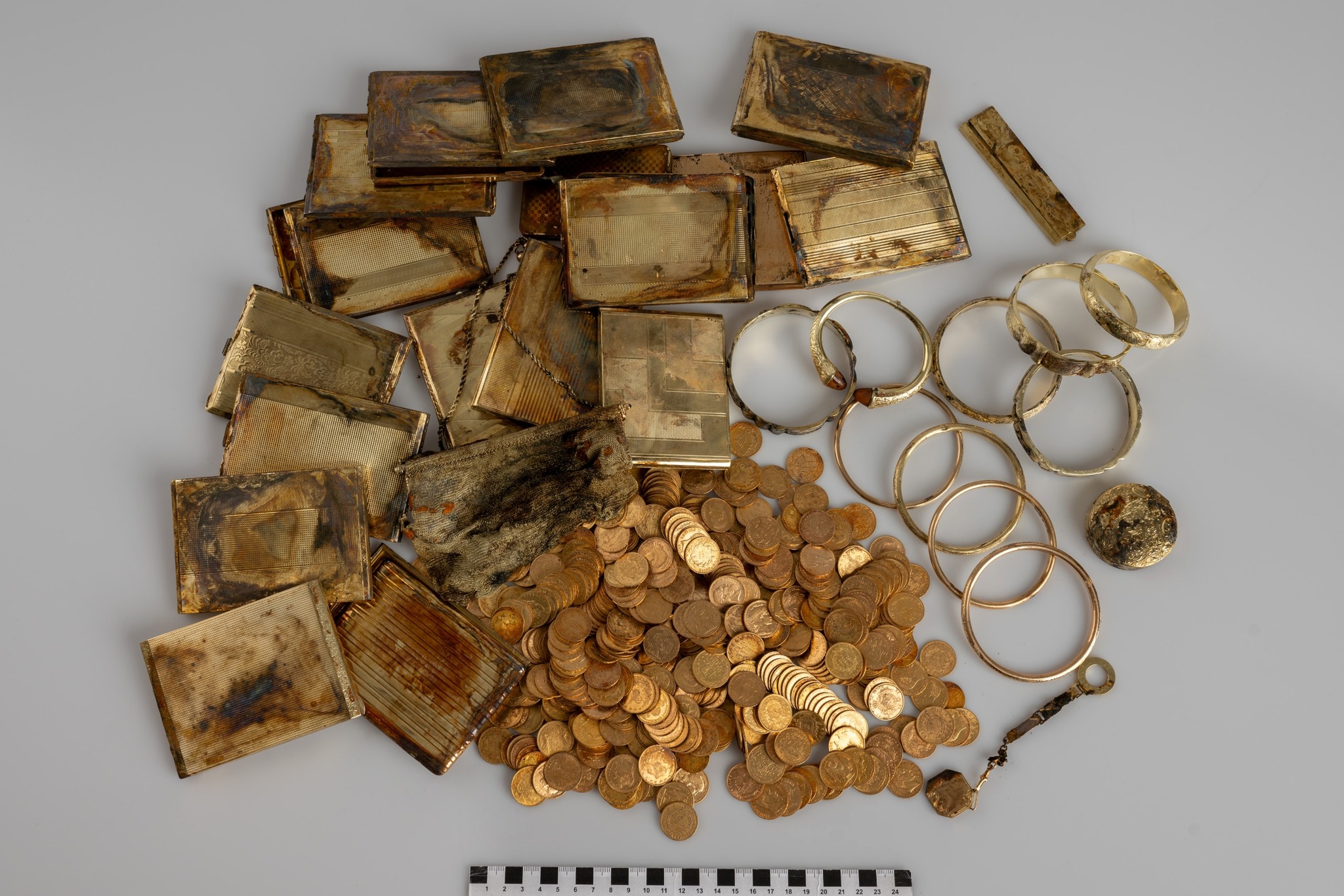
A pair of hikers in the Czech Republic discovered a 20th-century gold hoard worth over $340,000 in the foothills of the Krkonoše mountains. The find, consisting of 600 gold coins from multiple countries and a second box of gold items, was turned over to the Museum of Eastern Bohemia in Hradec Králové, where archaeologists are investigating its origins.

art mamadou abou catherine sarr collectors

Chicago-based collectors Mamadou-Abou and Catherine Sarr discuss their art collection, which spans works from West Africa, France, and the U.S., in an interview with Cultured. The couple, an investor and a jewelry designer, share how their collection began with Mamadou-Abou's discovery of contemporary African photography and emphasize a patient, conviction-driven approach to acquiring art. They also detail the SARR Prize, an initiative supporting emerging France-based artists with cash awards and a residency at Villa Albertine in Chicago.

literature ann rower lee and elaine autofiction

Ann Rower's novel "Lee & Elaine," originally published in 2002 by Serpent's Tail, is being reissued next month by Semiotext(e). The autofictional work follows a narrator—a lightly fictionalized version of Rower—who, after learning of the death of her friend, artist Hannah Wilke, becomes obsessed with the graves of Lee Krasner and Elaine de Kooning at Green River Cemetery. The narrator imagines these two women, known primarily as wives of famous male painters, as secret lovers or comrades, and attempts to write a joint biography that doubles as a journey of self-discovery.

The Musée d’Ixelles at the Crossroads of Different Perspectives

Le Musée d’Ixelles à la croisée de différents regards

The Musée d’Ixelles in Brussels, closed for eight years for expansion and renovation, is nearing completion of its architectural transformation with a reopening scheduled for spring 2027 (March 19). Founded in 1892 in a former slaughterhouse, the museum has grown through successive donations and a continuous acquisition policy, now holding over 15,000 works spanning Belgian art from the 19th century to the contemporary period. Director and curator Claire Leblanc, who has led the institution since 2006, emphasizes a participatory approach that integrates diverse public perspectives, including a project called "Musée comme chez soi" during the closure where locals hosted artworks in their homes.